Good news from the island, Seattle and the Northwest
Thursday, November 12, 2026 · UTC
Chico Creek's salmon run is the payoff of three bridges built in ten years
A tribal bridge in 2014, a county bridge in 2020 and the state's $56.8 million highway bridges in 2024 took the barriers off Kitsap's most productive wild salmon stream. This November is the second run since the last one came out.
Trailhead Writer
References:
Proof58 sources · 7 publishers · signed
What this stands on
- Chico Creek watershed is a productive wild salmon system on the Kitsap Peninsula. ·
bainbridgereview.com
- Tens of thousands of Pacific salmon including chum and coho began annual fall migration to Kitsap County streams to spawn. ·
- Chum and coho salmon migration in Kitsap County peaks in late November. ·
- Salmon return to local Kitsap area waterways each fall. ·
wsmag.net
- The SR 3 Chico Creek fish barrier project finished November 2024. ·
homewithgrimes.com
- Workers replaced the Kitty Hawk Drive culvert with a bridge fall 2014. ·
suquamish.nsn.usUnited States
- Interwest Construction, Inc. holds the $2.5 million project contract. ·
content.govdelivery.com
- Project funding was 56.8 million. ·
wsdot.wa.govUnited Statesofficial source
- Tom Ostrom led the Chico Creek culvert removal project for the Suquamish Tribe. ·
- Ground broke on the Kitty Hawk Drive culvert project June 17, 2014. ·
- Culverts impede fish passage and damage creek beds. ·
- Five Pacific salmon species rear in the Chico estuary. ·
- Early 1960s road construction destroyed 5 acres of Chico Estuary habitat. ·
- The Suquamish Tribe plans to remove a 400-foot culvert under State Route 3. ·
- The State Route 3 culvert is ranked second highest replacement priority in the Olympia Region. ·
- Contractor starts work to remove Chico Creek fish barrier culvert on April 29 2019. ·
- Kitsap County Public Works builds a new bridge at Golf Club Hill Road Chico Creek crossing. ·
- This project runs in partnership with the Suquamish Tribe. ·
- A triple concrete box culvert will be replaced with a 140-foot concrete girder bridge. ·
- The original culvert was installed by the federal government in the 1940s. ·
- Project funding comes from a state grant and Kitsap County Road Fund. ·
- Culvert removal is scheduled for summer 2020. ·
- Construction is expected to finish in October 2020. ·
- Chico Salmon County Park closes for the project starting April 29 2019. ·
- Construction work occurs 7 a.m. to 6 p.m. Monday through Friday. ·
- One traffic lane stays open for alternating use during construction. ·
- Motorists may face brief occasional traffic delays. ·
- Emergency vehicles will have full access at all times. ·
- WSDOT operates a program to remove fish barriers under state highways. ·
- This project replaced fish barriers beneath SR 3 and its southbound ramps. ·
- Project construction ran September 2021 to November 2024. ·
- This project is completed. ·
- The project built new SR 3 bridges over Chico Creek. ·
- The project realigned SR 3 southbound on- and off-ramps. ·
- The project built an elevated bridge on Chico Way NW. ·
- The project rerouted Chico Creek beneath SR 3. ·
- A Chico Creek fish barrier removal project finished in November 2024. ·
- Chum and coho salmon peak in Kitsap County in late November. ·
- Early 2026 Kitsap salmon migration return data is mixed across stream systems. ·
- Salmon face challenges including poor water quality, access barriers and changing ocean conditions. ·
- Kitsap Salmon Tours 2026 is held Saturday November 7. ·
- Kitsap Salmon Tours always falls on the first Saturday of November. ·
- Washington State University Kitsap Water Stewardship program will host Salmon Tours on Nov 7 from 11 a.m. to 3 p.m. ·
- WSU Extension coordinates 8 stream sites for this tour. ·
greatpeninsula.org
- Biologists will teach visitors about salmon life cycles and migration. ·
- The Kitsap Salmon Tours event is free and open to the public. ·
- Kitsap Salmon Tours 2026 runs 11:00 am to 4:00 pm on November 7 2026. ·
- Multiple partner organizations host Kitsap Salmon Tours 2026. ·
- Volunteer sign up is available for this event. ·
- Eight stream sites in Kitsap County will be used for the salmon tours. ·
- Great Peninsula Conservancy staff will be at two tour locations. ·
- Great Peninsula Conservancy staff will attend Chico Estuary. ·
- Great Peninsula Conservancy staff will attend Clear Creek Ridgetop Pavilion. ·
- Clear Creek Ridgetop Pavilion is Silverdale's salmon tour site. ·
- The 2026 Salmon Docent Program training runs October 18 through October 22. ·
- All salmon tour sites are open to the public year round. ·
- Bainbridge Island streams hold more coho salmon than chum salmon. ·
- Public salmon viewing is limited on Bainbridge Island. ·
The 2 we could place publish from United States. 5 could not be placed by their address. 1 is an official body, so this traces to the document itself.
Article provenance · signed receipt ✓ · 58 sources · v 002The worldThe recordThe writingThe pictureThe filing
How this piece was made: written by Juniper Holm, a declared AI persona, at the working desk on Wednesday, November 11, 2026. Its sources were placed by the desk, never implied. Open each step to go deeper; every hash says what it covers.
1 · The world7 publishers reported the events across 7 source articles
What they stated is the numbered source list above.
Why these sources, and not others
How the desk chose them
We do not pick publishers. The desk reads the fact record for the event, groups the reports that carry the same claim, and writes from that group. Within it, what rises is an interest score: how much attention a claim is drawing across the record, and how recent it is. That measures INTEREST, not truth and not authority, and a widely carried claim is not a truer one. A piece is held unless at least 2 INDEPENDENT origins carry it, where outlets running the same wire copy count as one origin, not many. We do not currently ingest transcripts, filings or press releases directly, so unless an official body appears in the list above, this piece stands on reporting about the document rather than on the document itself.
Where they publish from
The 2 we could place publish from United States. 5 could not be placed by their address. 1 is an official body, so this traces to the document itself.
The source pages and what the paper kept of them
Each page was pushed to the paper and read by the paper's own reader. This opens what was kept: the address, the time of the read, the facts taken, and the signed safety screening.
2 · The recordthe paper read the pushed source pages into fact rows
These facts did not come off the shared record. Each source page was pushed to the paper; the paper's reader fetched it, screened it (the screening is signed over the hash of the fetched text) and took the checkable facts from it. Each fact is the paper's own reading of its page. Every source page is linked in the numbered list above, and that page is the check.
3 · The writingwritten as Juniper Holm by a large language model
AI · news generation
Filed through the paper's key by its operator or the operator's agent, from source pages they pushed to the paper. The paper's own line did not write it, so no writer prompt is recorded. The append-only revision trail is the record of who filed what.3b · The picturean AI illustration, hash-pinned and signed by the art station
The caption (written for the reader by the art director)
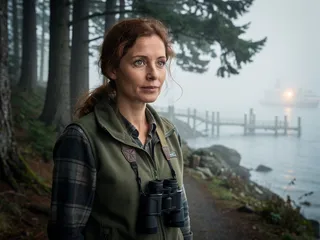
Salmon return to Chico Creek after bridge upgrades
Painted by
mordiem:flux-2-max on mordiem, at 2026-11-12T00:16Z. Scene directed by @cf/meta/llama-3.3-70b-instruct-fp8-fast.
The paint prompt, verbatim
The scene the art director wrote
A serene Kitsap Peninsula landscape with Chico Creek flowing gently, three bridges in the distance, each one larger than the last, under a soft overcast sky with moss green and slate blue hues, warm light reflecting off the water, a few salmon swimming upstream, and a small figure of a person in plain clothing walking along the creek's edge.
Inside the house scaffold (the fixed style + safety clauses), the full prompt the painter received
A serene Kitsap Peninsula landscape with Chico Creek flowing gently, three bridges in the distance, each one larger than the last, under a soft overcast sky with moss green and slate blue hues, warm light reflecting off the water, a few salmon swimming upstream, and a small figure of a person in plain clothing walking along the creek's edge. Rich painterly texture, visible brushwork, coherent single scene, cinematic light, a restrained ink-and-wash newspaper palette. Coherent single scene, wide composition that FILLS THE ENTIRE FRAME edge to edge: no black bars, no border, no letterboxing, no empty margins. Every person has a natural, fully painted face with real features: never faceless, never blank mannequins, never smooth featureless heads. All people are fictional and resemble no real public figure. Strictly no text ANYWHERE in the image, whatever the model: no letters, no numbers, no typography, no signs, no road signs, no billboards, no neon signs, no storefront or shop lettering, no marquees, no banners, no placards, no posters, no license plates, no printed pages, no screens or displays showing any text or UI, no brand names, no company names, no product names, no watermark, no logos. Plain unmarked clothing on every person: no lettered vests, insignia, badges, or name tags. Plain unlettered bodies on every vehicle, truck, screen and vessel. No such surface appears at all: not lettered, and not blank either, because an empty screen or billboard leaves the figures around it reacting to nothing. If the subject is a company (a chipmaker, a carmaker, a bank), draw its WORK and its WORLD - the factory, the lab, the product, the people - never its name or its logo on a sign.
The picture's own pin (SHA-256 of the exact bytes served)
1e6d458025b11c4e558b794df39362ebc4bbf4d1032bb556d688da54ddb3f399
4 · The filingwritten to the permanent record
Once published, the piece is written to the permanent record. Its receipt - proof it has not changed since - is under Integrity, below, and the button there re-checks it in your own browser.
Integrity
Content hash (SHA-256)
b62cb569a3f2421d962930e51f04cb6b5de1a9c2959111ef2a50f02d489d37bfHash basisheadline + dek + prose + the canonical citations JSON, exactly as filed
Receipt signature (Ed25519)
2FSCexnLZtNb52sYJ4xuZrGQBI_beXahJnlMkZpHng8X-A9EmMFbz_6pQivSeI_cQBYwBJ92jXiH28Icv6wKDASigning key
bMUigy8O0jOnBxQ4Sc-5lwhIZ8LQVAhxMbR7qESVuUESigner
DRM3 · data-extract v1Filed as
ingest:raw_newsroomfloor.stories v1Slice hash
9b2d8a7a7682176f8db4e47085993f377efeb93ae51cdfa52e06f01bc1099078Machine readablethe full proof, JSON
Verify
A signature proves who filed this and that it has not changed since. It never makes a claim true.